Can you move to the Central Coast and keep your low property tax base? Yes, if you qualify under Proposition 19 and file correctly, you may be able to transfer your base year value to a replacement primary residence anywhere in California, including the Central Coast.
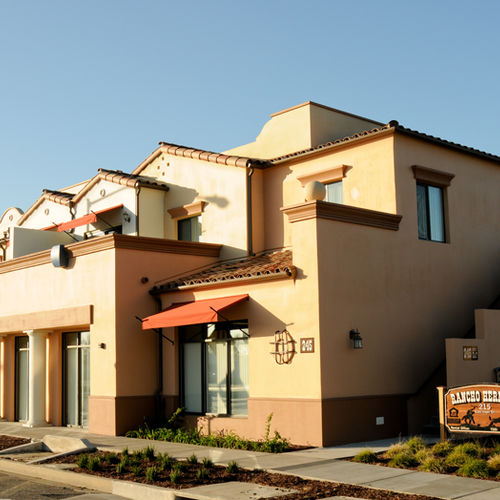
A modern coastal home is a strong visual match for a move-to-the-Central-Coast article.
That makes this rule especially important for longtime California homeowners who want to relocate without giving up the tax base they have built over time. The key is understanding who qualifies, how the timing works, and where to file.
What Proposition 19 Allows
Proposition 19 allows certain homeowners to transfer their base year value from a current primary residence to a replacement primary residence in California. The rule applies to eligible homeowners who are at least 55, severely disabled, or displaced by a qualifying disaster.
Unlike the older rule, Proposition 19 allows the replacement home to be located anywhere in California, not just in a limited set of counties. That is what opens the door to a move to the Central Coast without automatically resetting the property tax base to full market value, whether you are considering coastal cities or inland options like Paso Robles.
This image fits the lifestyle and home-buying angle of the topic.
Who Can Qualify
The main eligibility groups are straightforward. You may qualify if you are 55 or older, severely and permanently disabled, or a victim of a wildfire or other qualifying natural disaster.
You only need to meet one of those categories. You also need to use both homes as principal residences, since Proposition 19 is designed for owner-occupants rather than second homes or investment property.
How The Transfer Works
If the replacement home is equal to or less than the market value of the original home, the original assessed value may transfer without adjustment. If the replacement home costs more, the difference above the original home’s market value can be added to the transferred base year value.
That means you can still keep a meaningful tax advantage even when your new Central Coast home is more expensive. The result depends on the values involved, so it helps to compare the numbers before you write an offer.
A Central Coast listing-style photo supports the relocation and home search theme.
Timing And Filing
The replacement home generally must be purchased or newly built within two years of the sale of the original home. The claim is filed with the county assessor where the replacement home is located, and the transfer is not handled through escrow.
California’s rules also allow some eligible homeowners to use this transfer more than once. That detail can matter if you are planning another move later or comparing several possible replacement homes.
Why The Central Coast Works Well
The Central Coast is attractive to many longtime California homeowners because it offers a different pace of life without leaving the state. If you are moving from a high-tax inland or metro market, Proposition 19 can reduce the tax shock that often comes with downsizing or relocating.
This is also helpful if you want to move between counties, such as from Southern California to San Luis Obispo County or Santa Barbara County, or even into smaller communities like Arroyo Grande that offer a quieter coastal lifestyle. The state rule follows the homeowner, while the actual filing is handled locally by the county assessor.
This image reinforces the relaxed coastal lifestyle many buyers want on the Central Coast.
Planning Your Move
The smartest way to use Proposition 19 is to plan the move before you begin shopping. Start by estimating the likely tax base transfer, the price range of the replacement home, and the timing between the sale and purchase.
That matters because the tax result can change depending on whether you buy before or after selling, and whether the replacement home is above or below the value of the original home. A clear plan can help you avoid surprises after closing.
Santa Barbara imagery adds a strong Central Coast finish to the article.
Final Takeaway
Proposition 19 gives eligible California homeowners a real path to moving to the Central Coast while keeping a lower property tax base. The most important steps are confirming eligibility, buying or building within the required window, and filing the claim with the correct county assessor after the move.
Jason Francia - The Francia Team
Move With A Clear Plan
If you are thinking about a Central Coast move, the best next step is to compare your current tax base with the homes you want to buy, then build the timing around the claim rules. A move plan that starts with the numbers usually leads to a smoother purchase and a better outcome.
California’s Proposition 19 guidance explains the base year value transfer rules, and Santa Barbara County’s Proposition 19 page shows how the rule is applied locally.
This mode enables people with epilepsy to use the website safely by eliminating the risk of seizures that result from flashing or blinking animations and risky color combinations.
Visually Impaired Mode
Improves website's visuals
This mode adjusts the website for the convenience of users with visual impairments such as Degrading Eyesight, Tunnel Vision, Cataract, Glaucoma, and others.
Cognitive Disability Mode
Helps to focus on specific content
This mode provides different assistive options to help users with cognitive impairments such as Dyslexia, Autism, CVA, and others, to focus on the essential elements of the website more easily.
ADHD Friendly Mode
Reduces distractions and improve focus
This mode helps users with ADHD and Neurodevelopmental disorders to read, browse, and focus on the main website elements more easily while significantly reducing distractions.
Blindness Mode
Allows using the site with your screen-reader
This mode configures the website to be compatible with screen-readers such as JAWS, NVDA, VoiceOver, and TalkBack. A screen-reader is software for blind users that is installed on a computer and smartphone, and websites must be compatible with it.
Online Dictionary
Readable Experience
Content Scaling
Default
Text Magnifier
Readable Font
Dyslexia Friendly
Highlight Titles
Highlight Links
Font Sizing
Default
Line Height
Default
Letter Spacing
Default
Left Aligned
Center Aligned
Right Aligned
Visually Pleasing Experience
Dark Contrast
Light Contrast
Monochrome
High Contrast
High Saturation
Low Saturation
Adjust Text Colors
Adjust Title Colors
Adjust Background Colors
Easy Orientation
Mute Sounds
Hide Images
Virtual Keyboard
Reading Guide
Stop Animations
Reading Mask
Highlight Hover
Highlight Focus
Big Black Cursor
Big White Cursor
Text to Speech
Navigation Keys
Accessibility Statement
franciateam.com
October 25, 2026
Compliance status
We firmly believe that the internet should be available and accessible to anyone, and are committed to providing a website that is accessible to the widest possible audience,
regardless of circumstance and ability.
To fulfill this, we aim to adhere as strictly as possible to the World Wide Web Consortium’s (W3C) Web Content Accessibility Guidelines 2.1 (WCAG 2.1) at the AA level.
These guidelines explain how to make web content accessible to people with a wide array of disabilities. Complying with those guidelines helps us ensure that the website is accessible
to all people: blind people, people with motor impairments, visual impairment, cognitive disabilities, and more.
This website utilizes various technologies that are meant to make it as accessible as possible at all times. We utilize an accessibility interface that allows persons with specific
disabilities to adjust the website’s UI (user interface) and design it to their personal needs.
Additionally, the website utilizes an AI-based application that runs in the background and optimizes its accessibility level constantly. This application remediates the website’s HTML,
adapts Its functionality and behavior for screen-readers used by the blind users, and for keyboard functions used by individuals with motor impairments.
If you’ve found a malfunction or have ideas for improvement, we’ll be happy to hear from you. You can reach out to the website’s operators by using the following email [email protected]
Screen-reader and keyboard navigation
Our website implements the ARIA attributes (Accessible Rich Internet Applications) technique, alongside various different behavioral changes, to ensure blind users visiting with
screen-readers are able to read, comprehend, and enjoy the website’s functions. As soon as a user with a screen-reader enters your site, they immediately receive
a prompt to enter the Screen-Reader Profile so they can browse and operate your site effectively. Here’s how our website covers some of the most important screen-reader requirements,
alongside console screenshots of code examples:
Screen-reader optimization: we run a background process that learns the website’s components from top to bottom, to ensure ongoing compliance even when updating the website.
In this process, we provide screen-readers with meaningful data using the ARIA set of attributes. For example, we provide accurate form labels;
descriptions for actionable icons (social media icons, search icons, cart icons, etc.); validation guidance for form inputs; element roles such as buttons, menus, modal dialogues (popups),
and others. Additionally, the background process scans all of the website’s images and provides an accurate and meaningful image-object-recognition-based description as an ALT (alternate text) tag
for images that are not described. It will also extract texts that are embedded within the image, using an OCR (optical character recognition) technology.
To turn on screen-reader adjustments at any time, users need only to press the Alt+1 keyboard combination. Screen-reader users also get automatic announcements to turn the Screen-reader mode on
as soon as they enter the website.
These adjustments are compatible with all popular screen readers, including JAWS and NVDA.
Keyboard navigation optimization: The background process also adjusts the website’s HTML, and adds various behaviors using JavaScript code to make the website operable by the keyboard. This includes the ability to navigate the website using the Tab and Shift+Tab keys, operate dropdowns with the arrow keys, close them with Esc, trigger buttons and links using the Enter key, navigate between radio and checkbox elements using the arrow keys, and fill them in with the Spacebar or Enter key.Additionally, keyboard users will find quick-navigation and content-skip menus, available at any time by clicking Alt+1, or as the first elements of the site while navigating with the keyboard. The background process also handles triggered popups by moving the keyboard focus towards them as soon as they appear, and not allow the focus drift outside of it.
Users can also use shortcuts such as “M” (menus), “H” (headings), “F” (forms), “B” (buttons), and “G” (graphics) to jump to specific elements.
Disability profiles supported in our website
Epilepsy Safe Mode: this profile enables people with epilepsy to use the website safely by eliminating the risk of seizures that result from flashing or blinking animations and risky color combinations.
Visually Impaired Mode: this mode adjusts the website for the convenience of users with visual impairments such as Degrading Eyesight, Tunnel Vision, Cataract, Glaucoma, and others.
Cognitive Disability Mode: this mode provides different assistive options to help users with cognitive impairments such as Dyslexia, Autism, CVA, and others, to focus on the essential elements of the website more easily.
ADHD Friendly Mode: this mode helps users with ADHD and Neurodevelopmental disorders to read, browse, and focus on the main website elements more easily while significantly reducing distractions.
Blindness Mode: this mode configures the website to be compatible with screen-readers such as JAWS, NVDA, VoiceOver, and TalkBack. A screen-reader is software for blind users that is installed on a computer and smartphone, and websites must be compatible with it.
Keyboard Navigation Profile (Motor-Impaired): this profile enables motor-impaired persons to operate the website using the keyboard Tab, Shift+Tab, and the Enter keys. Users can also use shortcuts such as “M” (menus), “H” (headings), “F” (forms), “B” (buttons), and “G” (graphics) to jump to specific elements.
Additional UI, design, and readability adjustments
Font adjustments – users, can increase and decrease its size, change its family (type), adjust the spacing, alignment, line height, and more.
Color adjustments – users can select various color contrast profiles such as light, dark, inverted, and monochrome. Additionally, users can swap color schemes of titles, texts, and backgrounds, with over 7 different coloring options.
Animations – epileptic users can stop all running animations with the click of a button. Animations controlled by the interface include videos, GIFs, and CSS flashing transitions.
Content highlighting – users can choose to emphasize important elements such as links and titles. They can also choose to highlight focused or hovered elements only.
Audio muting – users with hearing devices may experience headaches or other issues due to automatic audio playing. This option lets users mute the entire website instantly.
Cognitive disorders – we utilize a search engine that is linked to Wikipedia and Wiktionary, allowing people with cognitive disorders to decipher meanings of phrases, initials, slang, and others.
Additional functions – we provide users the option to change cursor color and size, use a printing mode, enable a virtual keyboard, and many other functions.
Browser and assistive technology compatibility
We aim to support the widest array of browsers and assistive technologies as possible, so our users can choose the best fitting tools for them, with as few limitations as possible. Therefore, we have worked very hard to be able to support all major systems that comprise over 95% of the user market share including Google Chrome, Mozilla Firefox, Apple Safari, Opera and Microsoft Edge, JAWS and NVDA (screen readers), both for Windows and for MAC users.
Notes, comments, and feedback
Despite our very best efforts to allow anybody to adjust the website to their needs, there may still be pages or sections that are not fully accessible, are in the process of becoming accessible, or are lacking an adequate technological solution to make them accessible. Still, we are continually improving our accessibility, adding, updating and improving its options and features, and developing and adopting new technologies. All this is meant to reach the optimal level of accessibility, following technological advancements. For any assistance, please reach out to [email protected]